Ozone Generator Applications in Semiconductor Manufacturing
As semiconductor processes continue to advance toward smaller line widths, contamination control and surface treatment precision have become critical factors determining chip yield. Ozone (O₃), with its strong oxidizing properties, residue‑free nature, and process controllability, is playing an increasingly important role in the semiconductor industry.
I. Key Applications of Ozone in Semiconductor Manufacturing
Ozone is widely used across various semiconductor processes, including chemical vapor deposition (CVD), atomic layer deposition (ALD), wafer cleaning, photoresist stripping, surface treatment, and oxide growth.
1. Wafer Cleaning
Particles, organic residues, and metal contaminants on wafer surfaces are major causes of device failure. Ozonated water effectively removes surface contaminants through a combined oxidation and chelation mechanism, preventing short circuits or performance defects caused by residues. Compared with traditional RCA cleaning, ozone‑based cleaning is more environmentally friendly, eliminates costly waste treatment, and offers lower overall operating costs.
2. Gate Oxide Formation
In semiconductor devices such as MOSFETs, silicon dioxide (SiO₂) serves as the core insulating layer, and its quality directly affects device electrical performance. Ozone enables precise oxidation at low temperatures (200–400°C), producing uniform and dense oxide layers with low defect density and stable dielectric constants, while effectively avoiding thermal damage to the wafer structure.
3. Photoresist Stripping
After photolithography, residual photoresist must be completely removed. Ozonated water stripping achieves a corrosion rate of less than 0.1 nm/min on metal interconnects such as copper, significantly outperforming traditional sulfuric‑acid‑peroxide mixtures.
4. Thin Film Deposition
In TEOS/ozone CVD processes, ozone acts as an oxidant in film deposition reactions and is a key technology for producing high‑quality dielectric layers.
II. Technical Requirements for Semiconductor‑Grade Ozone Generation Systems
Semiconductor manufacturing places extremely stringent demands on ozone generator systems – high concentration, high purity, high precision, and high stability are all essential. The equipment must meet the following criteria:
Ultra‑high purity: ensuring no metal ions or particles contaminate wafers;
Precise concentration control: ozone concentration and flow rate must be accurately adjustable to suit various process requirements;
High reliability: capable of continuous 24/7 stable operation.
The market for semiconductor‑grade ozone generator is growing rapidly. According to industry research, the global market size for ozone generators used in semiconductor applications reached approximately USD 104 million in 2025 and is projected to grow to USD 160 million by 2032.
III. SANKANG OZONE – Supporting High‑Quality Semiconductor Industry Development
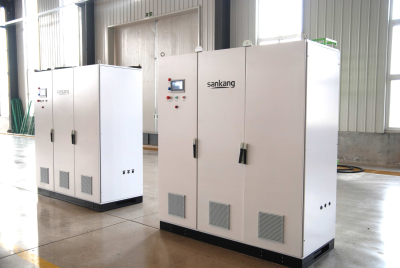
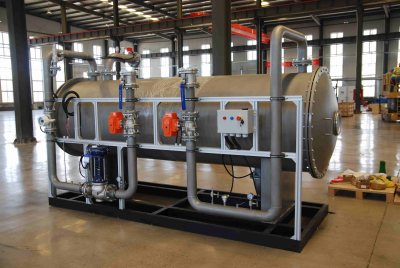
SANKANG OZONE has long been dedicated to ozone generation technology, with a continued focus on the needs of high‑end manufacturing sectors such as semiconductors and photovoltaics. Leveraging our technical expertise in ozone research, we are committed to providing customers with high‑purity, highly stable ozone generation system solutions.
Looking ahead, Sankang Ozone will continue to increase R&D investment in semiconductor‑grade ozone applications, contributing to the high‑quality growth of China's semiconductor industry.