Differences in Application Between Air‑Cooled and Water‑Cooled Ozone Generator
During operation, an ozone generator generates a significant amount of heat. If this heat is not dissipated effectively and in a timely manner, the ozone produced will decompose as quickly as it is formed due to elevated temperatures, resulting in a marked drop in both output and concentration. At present, the mainstream ozone generators on the market are classified into two types according to their cooling method: air‑cooled ozone generators and water‑cooled ozone generators. A proper understanding of the differences between these two is critical for industrial users when selecting the most suitable equipment.
1. Cooling Effectiveness and Operational Stability
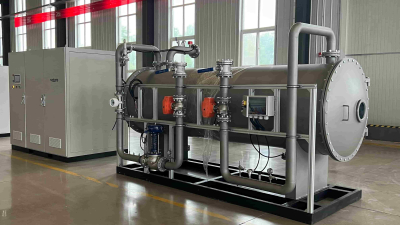
A water‑cooled ozone generator uses circulating cooling water as the heat‑dissipation medium, offering significantly better cooling performance than air‑cooled systems. Water‑cooled units operate stably with no ozone degradation, enabling long‑term continuous operation. The cooling water effectively removes the large amount of heat generated in the discharge cells, keeping the temperature of the dielectric material stable. This ensures consistent ozone output and concentration, and extends the service life of the core components.
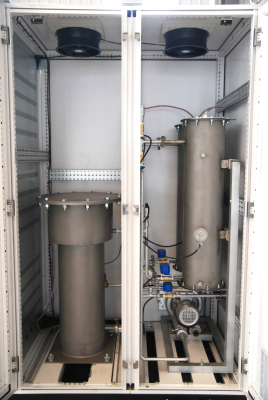
In contrast, an air‑cooled ozone generator relies on forced convection via fans for heat dissipation, which is far less effective. Ozone degradation is noticeable in air‑cooled units, and their output is heavily influenced by ambient temperature—typically, each 1°C rise in ambient temperature results in a corresponding drop in ozone production. As a result, air cooling is generally suitable only for small‑output, mid‑to‑low‑end ozone generators, or for applications where performance requirements are not stringent.
2. Applicable Output Ranges and Application Scenarios
In terms of output, there is a clear demarcation between the two types. Currently, most ozone generators with an output below 3–32 g/h adopt air‑cooled designs, while units above 40 g/h are all water‑cooled. The maximum output of a single air‑cooled ozone module is typically around 15 g/h. Water‑cooled ozone generators, on the other hand, feature mature technology, stable operation, and long service life; single‑unit outputs can reach 1 kg/h or more, making them the most widely used type of ozone generator in various industries worldwide.
In terms of applications, air‑cooled ozone generators are valued for their simple structure, easy operation, and no need for external water connections. They are typically used for space disinfection, small‑scale air sterilisation, and other short‑term, intermittent operations. Water‑cooled ozone generator, however, are extensively used in industrial fields that require prolonged continuous operation, such as purified water treatment, wastewater treatment, chemical oxidation, sterilisation in food and pharmaceutical workshops, and swimming pool disinfection.
3. The Critical Importance of Cooling Water for Kilogram‑Level Industrial Ozone Generators
For industrial ozone generators with outputs of 1 kg/h or more (kilogram‑level), the cooling water system is a core auxiliary system essential for stable, efficient, and safe operation. Its importance is demonstrated in the following key aspects:
1. The only effective means of heat removal. Large ozone generators produce enormous amounts of heat during high‑voltage discharge. Water is the only medium capable of effectively removing such substantial heat from large‑scale systems. Without a reliable cooling water system, the equipment cannot operate continuously.
2. Direct impact on ozone output and concentration. Research and tests indicate that the inlet temperature of the cooling water has a significant effect on ozone concentration and power consumption. The recommended cooling water temperature is below 25°C; higher temperatures lead to lower ozone yields. A stable cooling water temperature is a prerequisite for maintaining undiminished ozone production.
3. Enabling long‑term continuous operation. Industrial applications often require 24‑hour uninterrupted operation. Water‑cooled ozone generators, with their superior cooling performance and stable operation, are well suited to meet this demanding requirement. Air‑cooled units simply cannot sustain extended continuous run times.
4. Cooling water quality is paramount. The quality of the cooling water directly affects heat‑transfer efficiency and equipment lifespan. Scaling reduces heat‑transfer efficiency, which in turn decreases ozone production and increases maintenance costs. Industrial‑grade ozone generators have strict requirements for cooling water: turbidity ≤1 NTU, pressure 0.2–0.4 MPa, and temperature ≤28°C. Typically, tap water or recirculated cooling water is used.
Conclusion
In summary, air‑cooled ozone generators are suitable for small‑output, short‑duration, intermittent applications such as space disinfection, offering the advantages of simple structure and low cost. Water‑cooled ozone generator, with their superior heat‑dissipation performance, stable ozone output, and ability to run continuously over long periods, are the only viable choice for kilogram‑level industrial applications. For industrial users seeking stable production and reliable long‑term operation, a well‑designed cooling water system is an indispensable prerequisite.
When selecting an ozone generator, we recommend that users consider their actual output requirements, operating hours, on‑site water supply conditions, and other factors comprehensively, and give preference to water‑cooled models to ensure a solid return on investment and long‑term reliable operation of the equipment.