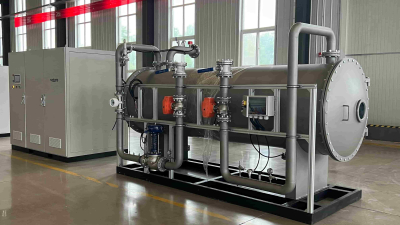
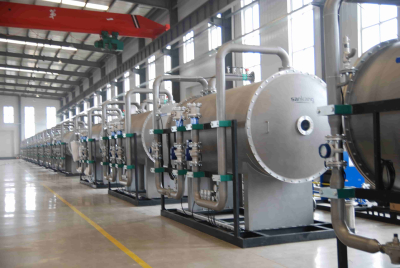
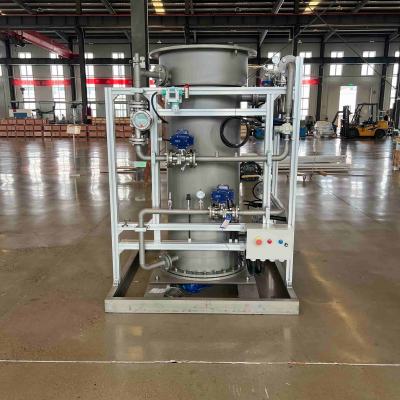
Ozone Reduction of Activated Sludge-SANKANG Ozone generator
1. Introduction
The activated sludge process is the most widely used biological treatment technology in municipal wastewater treatment plants worldwide. However, this process generates substantial amounts of excess sludge as a byproduct of microbial proliferation. This excess sludge contains pathogenic microorganisms, heavy metals, and toxic substances that can cause serious secondary pollution if improperly disposed. Sludge treatment and disposal costs can account for over 60% of a wastewater treatment plant‘s total operating expenses. Therefore, achieving sludge reduction while maintaining treatment performance has become a critical challenge for the industry.
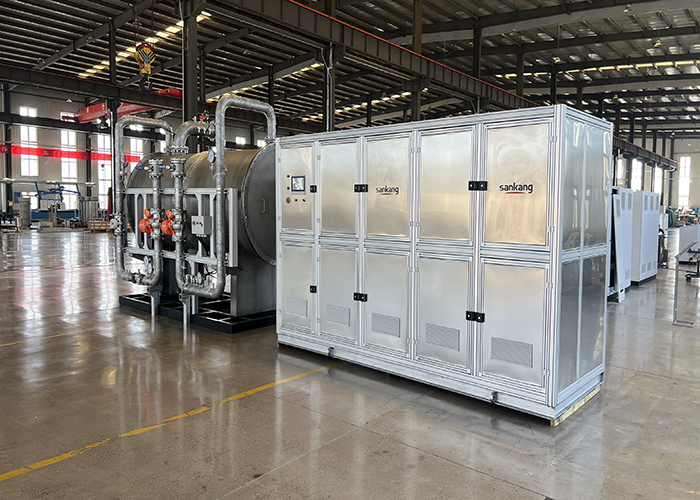
Among various sludge reduction technologies, ozonation has emerged as a research hotspot due to its high disintegration efficiency, absence of toxic byproducts, and minimal secondary pollution. The core equipment—the ozone generator—produces high-concentration ozone via corona discharge or electrolysis, providing the oxidant for subsequent reactions. Studies indicate that ozonation can reduce sludge production by up to 90%, and may even enable “near-zero” excess sludge discharge.
2. Mechanism: Lysis-Cryptic Growth
The core mechanism of ozone-induced sludge reduction can be summarized as a two-stage “lysis-cryptic growth” process.
2.1 Lysis (Cell Disintegration)
Ozone is a powerful oxidant that directly attacks and destroys microbial cell walls and membranes through electrophilic reactions. Upon cell rupture, intracellular polysaccharides, proteins, and other biological macromolecules, along with cytoplasm, are released into the liquid phase. This process results in:
Loosening of sludge flocs and disruption of filamentous bacterial networks;
Reduction in floc size, increased density, and significantly improved settling performance;
Marked increases in soluble COD (SCOD), total nitrogen (TN), total phosphorus (TP), proteins, and polysaccharides in the liquid phase.
Research shows that within an ozone dosage range of 0.01–0.15 gO₃/gVSS, SCOD concentration can increase by up to 60.6 times, while total suspended solids (TSS) can be reduced by a maximum of 39.6%.
2.2 Cryptic Growth
The dissolved organic matter released from disintegrated cells becomes a carbon source and “food” for the remaining viable bacteria in the system. These microorganisms utilize the solubilized organics for metabolism and growth—a process known as “cryptic growth”. Through this mechanism, the solid sludge is partially oxidized to CO₂ and H₂O, and partially converted into new microbial cells, resulting in a net reduction in total sludge mass.
3. Reduction Performance and Key Influencing Factors
3.1 Ozone Dosage
Ozone dosage is the most critical factor determining reduction efficiency. Research demonstrates that sludge yield decreases significantly with increasing ozone dosage. In control tests without ozone, the yield coefficient was approximately 0.45 gSS/gSCOD; at a dosage of 0.01 gO₃/gSS, it dropped to 0.36 gSS/gSCOD; at 0.02 gO₃/gSS, further to 0.20 gSS/gSCOD; and at 0.03 gO₃/gSS, it was only 0.03 gSS/gSCOD. In an AO process, at an ozone dosage of 0.05 gO₃/gSS with daily ozonation of 10%, 20%, and 30% of the reactor sludge, the apparent sludge yield coefficient decreased by 24%, 46%, and 73%, respectively.
Further experiments show that as ozone dosage increases from 0 to 0.04 gO₃/gSS, sludge yield can decrease from 0.45 gSS/gSCOD to a negative value (-0.04 gSS/gSCOD), indicating net reduction. The optimal dosage is typically in the range of 0.03–0.04 gO₃/gVSS. Such precise dosing is delivered by an ozonator, whose stable output is essential for consistent oxidation efficiency and reduction performance.
3.2 Other Influencing Factors
In addition to ozone dosage, the following factors affect reduction performance:
Ozone inlet concentration: Higher concentrations achieve greater sludge reduction efficiency;
Initial sludge concentration: Too low a concentration wastes ozone, while too high a concentration reduces effectiveness; MLSS of approximately 10 g/L is generally recommended;
pH: Affects ozone oxidation efficiency and sludge disintegration effectiveness;
Reactor operation mode: Continuous operation typically outperforms batch operation.
3.3 Impact on Effluent Quality
Ozonation achieves sludge reduction with limited impact on the system‘s biological treatment capacity. Studies show that COD removal rates remain above 88% even after prolonged ozonation. While oxygen utilization rate (OUR) decreases slightly, the sludge maintains relatively high activity. Simultaneous ozonation does not significantly affect COD or NH₄⁺-N removal in SBR systems.
4. Engineering Application Approaches
Ozone sludge reduction technology is implemented in practice through several approaches, all relying on an integrated ozone production unit for reliable gas supply and system control.
4.1 Bypass Treatment (Mainstream Approach)
A portion of the return activated sludge is directed to an ozone treatment unit for disintegration, then recycled back to the aeration tank for biological treatment. This is the most widely adopted approach and has been validated in multiple pilot and full-scale projects. In this mode, the ozone production unit is typically arranged in a bypass loop to flexibly regulate the treated sludge ratio.
4.2 Simultaneous Ozonation
Ozone is directly introduced into the biological reactor (e.g., SBR, MBR) for simultaneous oxidation. The A/O-MBR+O₃ lysis combined process has demonstrated effective sludge reduction with enhanced nitrogen removal.
4.3 Combined Processes
Ozone can be integrated with mechanical disintegration, high-efficiency composite bacteria, Mn²⁺ catalysis, hydrogen peroxide, and other technologies to further enhance reduction efficiency. For example, ozone coupled with mechanical disintegration rapidly releases intracellular organics; Mn²⁺-catalyzed ozonation achieves superior in-situ sludge reduction.
5. Advantages and Outlook
Ozone-based sludge reduction technology offers the following significant advantages:
Substantial reduction: Ozonation can reduce sludge production by up to 90%;
No secondary pollution: Ozone decomposes into oxygen, introducing no new pollutants;
Improved settling: Ozone disintegration increases floc density and reduces SVI;
Internal carbon source: Released organics serve as a carbon source, enhancing nitrogen and phosphorus removal;
Cost-effective: Comprehensive cost and carbon emission assessments show significant economic advantages.