Application of Ozone generator in Pulp Bleaching
1. Introduction
The paper industry is a fundamental and strategically important sector closely related to national economic development and people's livelihoods. However, traditional chlorine‑based pulp bleaching processes generate wastewater containing refractory and toxic pollutants such as adsorbable organic halogens (AOX) and dioxins, causing severe environmental pollution. With increasingly stringent environmental regulations and national policies promoting energy conservation, emission reduction, and green low‑carbon development, Elemental Chlorine‑Free (ECF) and Totally Chlorine‑Free (TCF) bleaching technologies have been widely adopted. Among these, ozone bleaching has gained growing attention in the pulp and paper industry due to its short process flow, fast reaction rate, low bleaching cost, and low wastewater discharge.
2. Properties of Ozone and Bleaching Mechanism
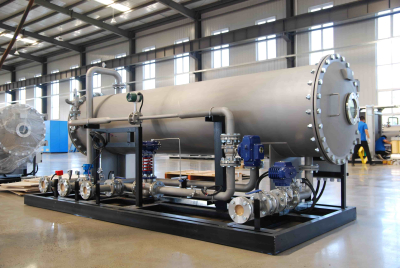
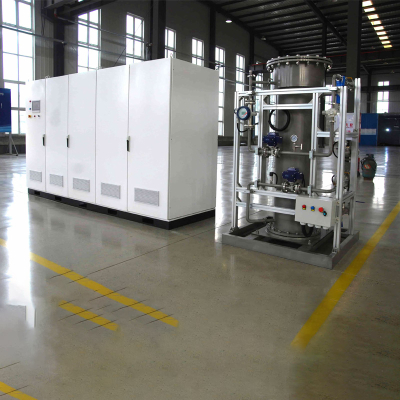
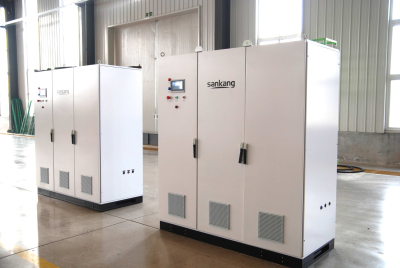
Ozone (O₃) is a powerful oxidant with an oxidation potential of 2.07 eV, much higher than that of chlorine (1.36 eV) and chlorine dioxide (1.5 eV). In the paper industry, ozone is typically generated on‑site from oxygen using electrical energy via an ozone generator, with an ozone concentration of about 8%–14% by volume. Producing 1 kg of ozone consumes approximately 12.24 kWh of electricity, which is comparable to the energy and cost of producing chlorine dioxide.
During pulp bleaching, ozone reacts with lignin, breaking the carbon‑carbon bonds in the aromatic rings of both phenolic and non‑phenolic lignin structures. This oxidative degradation of lignin achieves decolorization and bleaching of the pulp.
3. Advantages of Ozone Bleaching
Ozone bleaching offers multiple significant benefits:
Environmentally friendly – a Totally Chlorine‑Free (TCF) process
Ozone bleaching effluents contain no adsorbable organic halogens (AOX), making them much more environmentally benign. Compared with traditional chlorine‑based bleaching, ozone bleaching does not produce chlorinated organic compounds.Excellent bleaching performance and high pulp brightness
As a strong oxidant, ozone is highly reactive. Practical experience in overseas mills shows that pulp brightness can easily reach 93% ISO with ozone bleaching. Studies have reported that under conditions of 40% pulp consistency and an ozone dosage of 0.9 kg/(min·t), the brightness of bagasse oxygen‑alkali pulp can be increased from 58.6% to 74.5% ISO.Reduced bleaching costs
Research indicates that 1 kg of ozone has a bleaching capacity equivalent to 2–3 kg of chlorine dioxide, yet the production cost of 1 kg of ozone is roughly the same as that of 1 kg of chlorine dioxide. Thus, ozone bleaching can effectively lower overall bleaching costs.Lower wastewater discharge and reduced pollution load
The filtrate from the ozone bleaching stage contains no chloride ions and is non‑corrosive. It has low chlorine content and can be recycled after treatment. With ozone bleaching, wastewater discharge per ton of pulp can be reduced to below 10 m³, and even down to 5 m³. Both AOX and CODcr in the bleaching effluent are significantly decreased.Energy savings and fast reaction
Ozone bleaching operates at low temperatures and generally does not require steam heating of the pulp, thereby saving steam consumption. Among all pulp bleaching agents, ozone has the strongest reactivity and the shortest reaction time, so the bleaching reactor can be very compact, substantially reducing capital investment.Reduced brightness reversion and improved paper machine runnability
Ozone bleaching significantly lowers the tendency of pulp brightness reversion (yellowing) and reduces extractives content in the pulp by 50%–75%, which helps improve paper machine runnability.
4. Challenges and Solutions in Ozone Bleaching
Despite its advantages, ozone bleaching faces certain challenges. The main issue is that ozone is a non‑selective oxidant – while reacting with lignin, it can also degrade carbohydrates (cellulose and hemicellulose), leading to decreased pulp viscosity and impaired strength properties.
Through long‑term process research, this problem can be effectively mitigated by the following measures: controlling ozone dosage, adjusting reaction time, and adding protective agents (e.g., oxalic acid). Studies have shown that under conditions of bleaching temperature 10°C, ozone concentration 80 g/Nm³, and oxalic acid dosage 1.0%, eucalyptus pulp can achieve a brightness of 72.8% ISO with a viscosity of 678 mL/g, and the resulting paper has a tensile index of 78.9 N·m/g, with all physical properties meeting good performance criteria.
5. Current Status and Future Prospects
In 1992, the Union Camp mill in Franklin, Virginia, USA, was the first to commercialise ozone bleaching. By September 2011, 23 pulp mills worldwide, with a total of 26 production lines, were using ozone bleaching technology. The production capacity of advanced ozone generator has now reached 750–1,000 kg/h, sufficient to meet the bleaching needs of a pulp mill with an annual capacity of 650,000 tonnes.
In China, theoretical research on ozone bleaching began in the 1980s and has laid a solid foundation. In recent years, with continuous improvements in ozone generator and reaction vessels by domestic and international equipment manufacturers, Chinese pulp and paper enterprises are increasingly showing interest in and adopting ozone bleaching technology.
6. Conclusion
Ozone bleaching technology, as a green and efficient pulp bleaching process, offers remarkable advantages in improving pulp brightness, reducing pollutant emissions, and lowering bleaching costs. With increasingly stringent environmental requirements and ongoing advancements in ozone generation, ozone bleaching is expected to become a mainstream clean bleaching process in the pulp and paper industry, with broader application in the future.