UV Disinfection vs. Ozone Generator in Water Treatment: Applications, Advantages, and Limitations
Ultraviolet (UV) disinfection and ozone-based oxidation are two advanced, widely used technologies in water treatment. They operate on fundamentally different mechanisms and are chosen based on water quality, treatment objectives, and operational constraints.
UV Disinfection in Water Treatment
UV disinfection is a physical process that uses UVC light (especially at 254 nm) to irradiate water as it flows through a chamber. The UV rays penetrate microbial cell walls and damage their DNA or RNA, rendering them unable to replicate. This method is commonly applied in municipal wastewater treatment plants, particularly for secondary effluent and reclaimed water.
Advantages of UV
UV disinfection introduces no chemicals into the water, leaving its physicochemical properties virtually unchanged. It produces no disinfection by‑products such as trihalomethanes. The process is fast – most pathogens are inactivated within seconds. It is insensitive to pH and temperature variations, requires compact equipment, and is easy to automate. Operation is safe, without the risks associated with storing or handling hazardous chemicals. UV is especially suitable for areas with limited chlorine supply or where chlorinated by‑products are strictly regulated.
Limitations of UV
UV light has poor penetrating power. Suspended solids, turbidity, and particulates absorb or scatter the UV rays, reducing efficacy. It is not effective for waters with UV transmittance below certain levels (e.g., SS > 30 mg/L). UV provides no residual disinfection; after treatment, some microorganisms may undergo photoreactivation if exposed to light. Moreover, spores, cysts, and viruses are more resistant to UV than common bacteria, and UV has little effect on biofilm in pipelines.
Ozone Generator in Water Treatment
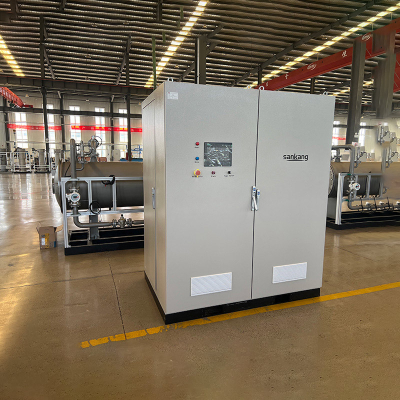
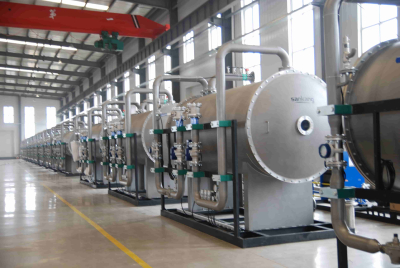
An ozone generator produces ozone (O₃) on‑site via silent electrical discharge. The ozone gas is then diffused into the water through micro‑porous diffusers or bubble contactors. Ozone is a powerful oxidant that decomposes in water to release highly reactive atomic oxygen and hydroxyl radicals, which instantly oxidise organic matter, bacteria, and viruses. Ozone is widely used in drinking water treatment, and in wastewater it is often applied for decolourisation and degradation of recalcitrant organics.
Advantages of an Ozone Generator
The ozone generator provides broad‑spectrum, rapid disinfection – it is 600 to 3,000 times faster than chlorine against a wide range of pathogens, including resistant spores and viruses. Ozone performance is less affected by pH and temperature. The reaction is fast and simple; ozone readily decomposes into oxygen, leaving no persistent chemical residues. Beyond disinfection, ozone removes colour, taste, and odour, oxidises iron and manganese, and breaks down refractory organics and some carcinogenic compounds. Ozone can also act as a coagulant aid, enhancing subsequent treatment steps.
Limitations of an Ozone Generator
Ozone must be generated on‑site and cannot be stored; energy consumption is high – about 20–35 kWh per kg of ozone produced. The capital and maintenance costs of an ozone generator are considerable. When oxidising bromide‑containing raw water, ozone may form bromate, classified as a potential 2B carcinogen. Ozone is highly corrosive to rubber, plastics, and other materials. In wastewater, the presence of COD and suspended solids consumes a significant portion of ozone, requiring higher dosages and longer contact times. Moreover, ozone gas is irritating to human mucosa, so strict safety measures are required during operation.
Combined Use of Both Technologies
UV and ozone have complementary strengths. In practice, they are often combined as a UV/O₃ advanced oxidation process for high‑quality drinking water treatment and industrial wastewater reuse. This integrated approach effectively inactivates pathogens and degrades micropollutants while minimising the formation of disinfection by‑products. For strict applications, both UV and ozone are frequently paired with chlorine‑based disinfectants to maintain residual protection in distribution networks.
Selection Guidance
Choose UV for clean, low‑turbidity waters requiring rapid, chemical‑free disinfection. Choose an ozone generator when deep oxidation, removal of taste/odour, or degradation of trace organics is needed – despite higher costs and complexity. For the most demanding scenarios, combining UV with ozone offers the best overall performance.