Ozone Generator in Drinking Water Treatment: Principles, Advantages, and Challenges
As the demand for higher drinking water quality increases and the complexity of source water pollution grows, traditional chlorination has begun to show its limitations. Ozone (O₃) , a powerful oxidant and highly effective disinfectant, is playing an increasingly important role in drinking water treatment and is often referred to as the “cleanest chemical oxidant and disinfectant.”
1. Characteristics and Mechanism of Ozone
Ozone is an allotrope of oxygen, composed of three oxygen atoms. It has extremely strong oxidation potential, with a redox potential of 2.07 V—second only to fluorine and much higher than chlorine (1.36 V). In water treatment, ozone serves two primary functions:
Disinfection: Ozone directly destroys the cell membranes of bacteria and viruses, penetrates into the cells, and oxidizes essential enzymes or genetic material (DNA/RNA), leading to microbial inactivation. Its disinfection rate is extremely fast—600 to 3,000 times that of chlorine—and it is highly effective against chlorine-resistant protozoa such as Cryptosporidium and Giardia.
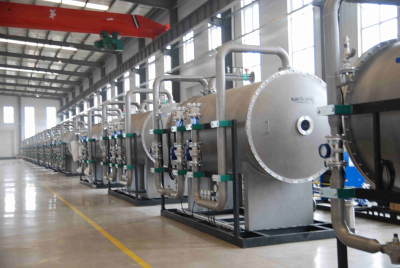
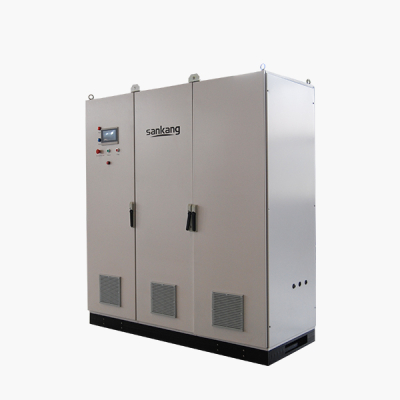
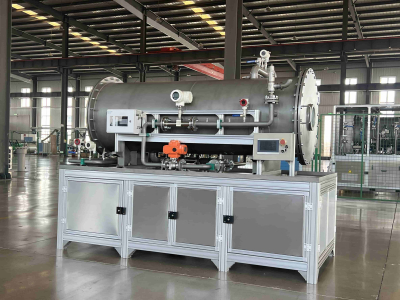
Oxidation and Pollutant Removal: Ozone oxidizes dissolved inorganic substances such as iron, manganese, and sulfides, converting them into insoluble precipitates that can be removed by filtration. It also oxidizes and breaks down various organic compounds, including pesticide residues, algal toxins, and taste- and odor-causing compounds (such as geosmin and 2-methylisoborneol), significantly improving the taste and odor of water. To achieve reliable and efficient ozone generation for these tasks, many modern water treatment facilities choose a high-performance Sankang ozone generator as the core equipment.
2. Typical Positions of Ozonation in Drinking Water Treatment
In practical water treatment plants, ozone is typically applied at two points:
2.1 Pre-ozonation
Ozone is added before coagulation and sedimentation. The main purposes are:
Enhanced coagulation: Ozone can break down the protective coating of organic matter around colloidal particles, destabilizing them and improving the efficiency of subsequent coagulation and sedimentation.
Taste and odor removal: Eliminates earthy/musty odors caused by algal metabolites at the very beginning of the treatment process.
Microbiological control: Controls excessive microbial growth in downstream treatment units such as filters.
2.2 Main Ozonation (Intermediate Ozonation)
Ozone is typically applied after sand filtration and before activated carbon filtration. This is a key step in advanced treatment processes, especially when combined with biological activated carbon—known as the Ozone-Biological Activated Carbon (O₃-BAC) process.
Ozone oxidizes large, refractory organic molecules into smaller, biodegradable organic compounds.
The subsequent activated carbon filter harbors a biofilm of microorganisms that utilize these smaller organic molecules as a food source, thereby removing them efficiently.
This combined process significantly reduces chemical oxygen demand (COD), ammonia nitrogen, and disinfection by-product precursors, greatly improving the final water quality. The stable and precise ozone output required for such advanced treatment is reliably provided by a Sankang ozone generator, which ensures consistent performance in both pre-ozonation and main ozonation stages.
3. Advantages of Ozone Treatment
High efficiency and broad spectrum: Ozone is highly effective against bacteria, viruses, spores, and protozoa, and it does not introduce secondary pollution.
No chlorinated by-products: Traditional chlorination can produce carcinogenic disinfection by-products such as trihalomethanes (THMs) and haloacetic acids (HAAs). Ozone disinfection does not form these compounds. However, it should be noted that if the source water contains bromide, ozonation may generate trace amounts of bromate (a potential carcinogen), which must be controlled through process optimization (e.g., ammonia addition, pH adjustment) or subsequent biological filtration.
Improved aesthetic qualities: Effectively removes color, turbidity, and unpleasant tastes and odors, resulting in clear, fresh-tasting water.
Increased dissolved oxygen: Ozone decomposes into oxygen, raising the dissolved oxygen level in the treated water, which gives the finished water a “fresh” quality.
4. Limitations and Challenges in Application
Despite its effectiveness, several challenges must be addressed in practice:
No residual disinfectant: Ozone has a short half-life in water (typically minutes to tens of minutes) and leaves no residue. Therefore, after ozonation, a small amount of chlorine or chloramine must be added to maintain a residual disinfectant in the distribution system and prevent bacterial regrowth during transport.
Higher capital and operational costs: Ozone generation requires high-voltage discharge or ultraviolet radiation, leading to higher equipment investment and energy consumption. However, selecting a reliable Sankang ozone generator can help optimize energy efficiency and long-term operational stability.
Bromate formation risk: As mentioned earlier, when bromide is present in the source water, ozonation can produce bromate (classified as Group 2B by the International Agency for Research on Cancer). Proper control measures must be incorporated during process design.
Incomplete mineralization: Ozone alone rarely achieves complete mineralization (conversion to carbon dioxide and water) of large organic molecules; it primarily alters their structure. Therefore, ozonation is often combined with activated carbon or hydrogen peroxide to achieve advanced treatment.
5. Conclusion
The application of ozone in drinking water treatment represents a critical advancement from conventional treatment to advanced treatment in modern water safety assurance. Although ozonation involves higher capital costs and often requires integration with biological treatment or post-disinfection, its outstanding performance in improving chemical safety, biological safety, and aesthetic quality makes it a core technology for addressing micro-pollution in source water and ensuring safe drinking water for the public. With reliable equipment such as the Sankang ozone generator, water treatment plants can achieve consistent, high-efficiency ozonation while maintaining operational stability.
As equipment costs continue to decline and water quality standards become more stringent, the ozone-biological activated carbon (O₃-BAC) advanced treatment process is being increasingly adopted in modern water treatment plants. It provides a solid technical foundation for establishing a comprehensive water quality assurance system “from source to tap.”