Ozone in Livestock and Aquaculture Wastewater Treatment: A Game-Changer for Sustainable Agriculture
As the global demand for animal protein continues to rise, livestock and aquaculture operations are expanding rapidly—bringing with them an urgent environmental challenge: the effective treatment of high-strength wastewater. Effluents from swine farms, poultry operations, and recirculating aquaculture systems (RAS) are notoriously difficult to treat, loaded with refractory organics, antibiotics, suspended solids, and nutrients that threaten water bodies and ecosystems.
Conventional biological treatment alone often falls short, struggling to mineralize persistent compounds and meet increasingly stringent discharge limits. This is where ozone—one of the most powerful oxidizing agents available—is proving to be a transformative solution.

The Ozone Advantage
Ozone (O₃) decomposes in water to produce hydroxyl radicals (·OH), which possess an oxidation potential of 2.80 V—significantly higher than ozone itself (2.07 V). This enables ozonation to break down complex organic molecules, oxidize ammonia and nitrite, remove color and odor, and inactivate pathogens with remarkable efficiency.
In marine recirculating aquaculture systems, research has demonstrated that ozone can simultaneously remove nitrite and yellow substances while achieving effective bacterial reduction. In livestock wastewater treatment, ozone-based systems have achieved suspended solids removal exceeding 94%, COD removal rates around 82%, and total phosphorus removal over 98%.
The Three-Stage Ozone Generator Approach
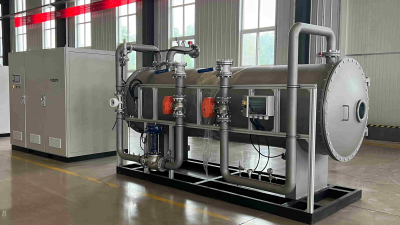
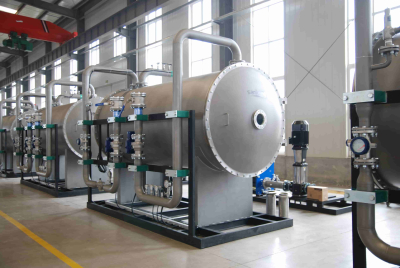
While single-pass ozonation delivers meaningful treatment benefits, the real breakthrough lies in multi-stage ozone application. This is where the three-stage ozone generator configuration comes into play—an advanced treatment architecture that is gaining traction in both research and field applications.
Why three stages? The answer lies in ozone's reaction kinetics. Ozone is consumed rapidly upon contact with organic matter; in many cases, it is depleted within the first 30 seconds of contact time. A single-stage reactor can achieve at best approximately 70% destruction of target contaminants. By contrast, when a three-stage ozone generator system is deployed with reactors in series, destruction efficiency increases dramatically—to 96% with a second stage, and up to 99% with a third stage.
This staged approach addresses a fundamental limitation of ozonation: because ozone is depleted so rapidly, fresh ozone feed is required at the entrance to each successive reactor to maintain oxidative power. A three-stage ozone generator system ensures that wastewater is exposed to progressively renewed ozone doses, maximizing contaminant degradation while optimizing ozone utilization efficiency.
Applications in Livestock Wastewater Treatment
Recent pilot-scale studies have validated the effectiveness of multi-stage ozone configurations in real-world livestock wastewater treatment. One study utilized an ozone-biological aerated filter (BAF) hybrid process with a 1 m³/day capacity, employing a three-stage ozone generator architecture (1st ozone–BAF–2nd ozone). This optimized hybrid process achieved removal efficiencies of 98% for chromaticity, 95% for suspended solids, and 92% for trace-organic compounds. The results highlighted that the removal efficiency followed the order: 1st ozone >> 2nd ozone ≥ BAF, demonstrating the critical role of the three-stage ozone generator approach in achieving comprehensive treatment.
In swine wastewater treatment, catalytic ozonation systems have achieved 40.4% COD removal and 79.6% UV254 removal within 30 minutes—nearly doubling the performance of ozonation alone. When combined with biological treatment, ozone-based systems have been shown to meet stringent effluent discharge standards.
Three-Stage Disinfection and Purification
Beyond organic oxidation, the three-stage ozone generator concept also extends to disinfection applications. Patented systems for livestock manure and wastewater treatment now incorporate three-stage ozone aeration devices as part of integrated treatment trains that include coagulation, sedimentation, and filtration. These systems use the three-stage ozone generator to eliminate toxic substances and harmful microorganisms, ensuring that treated water meets safety standards before discharge or reuse.
The multi-stage approach is particularly valuable for aquaculture operations, where water reuse rates are high and pathogen control is critical. Ozone application in RAS, maintained at appropriate concentrations, provides effective disinfection while ozone nanobubble technology—which achieves 2.3 times higher mass transfer efficiency than conventional methods—enables near-complete (>99%) antibiotic degradation.
A Sustainable Path Forward
The adoption of three-stage ozone generator systems represents a significant advance in sustainable wastewater management for the agricultural sector. By enhancing ozone utilization efficiency, reducing chemical byproducts, and enabling water reuse, these systems address both environmental and economic imperatives.
As regulatory pressures intensify and water scarcity concerns grow, the three-stage ozone generator will undoubtedly play an increasingly central role in helping livestock and aquaculture operations meet their treatment goals—turning a costly waste stream into a valuable resource for a more sustainable future.