Ozone Application in the Carbon Black Industry: A Technical Overview
Introduction
Carbon black is one of the most widely produced industrial materials, serving as a critical pigment and reinforcing agent in applications ranging from tires and rubber products to printing inks, coatings, plastics, and conductive materials. As end-use industries demand increasingly specialized performance characteristics—better dispersibility, improved insulation, enhanced mechanical properties, and reduced toxicity—surface modification of carbon black has become essential.
Among the various oxidation methods available, ozone oxidation has emerged as the technology of choice for industrial-scale carbon black surface modification. This article provides a comprehensive overview of ozone application in the carbon black industry, covering the underlying principles, process advantages, key equipment (with particular emphasis on ozone generators), critical process parameters, and real-world industrial implementations.
Why Ozone? The Science Behind Carbon Black Oxidation
The Surface Chemistry Challenge
Virgin carbon black is inherently oleophilic (oil-loving) due to its graphitic, non-polar surface structure. This characteristic makes it difficult to disperse in polar solvents or aqueous systems, leading to agglomeration, black spots, and uneven color distribution in final products. Furthermore, raw carbon black particles often contain polycyclic aromatic hydrocarbons (PAHs) resulting from incomplete combustion during production, posing potential health and safety concerns.
The Ozone Solution
Ozone (O₃) is one of the most powerful oxidizing agents available commercially. When carbon black is exposed to ozone, the oxidation reaction introduces oxygen-containing functional groups—such as carboxyl (-COOH), hydroxyl (-OH), carbonyl (C=O), and lactone groups—onto the carbon black surface. This surface chemistry transformation delivers multiple performance benefits:
Enhanced dispersibility: The introduction of polar functional groups makes carbon black hydrophilic, enabling faster and more uniform dispersion in water-based and polar solvent systems
Reduced toxicity: The oxidation process decomposes and removes surface-bound PAHs, producing cleaner, safer carbon black for consumer-contact applications
Superior flow characteristics: Ozonized carbon blacks exhibit improved "flow" properties in ink and coating formulations
Better insulation performance: Modified carbon blacks with increased functional group density offer enhanced electrical insulation properties
Ozone vs. Alternative Oxidation Methods
| Aspect | Ozone Oxidation | Nitric Acid Oxidation | Thermal (Air) Oxidation |
|---|---|---|---|
| Reaction Temperature | Ambient to moderate | Elevated | High (dangerous) |
| Corrosion Issues | Minimal | Severe | Moderate |
| Environmental Impact | Ozone decomposes to O₂ | Acid waste streams | NOx emissions |
| Process Control | Precise, rapid reaction | Complex | Less precise |
| Safety | Relatively safe | Hazardous chemicals | High-temperature risks |
Compared to traditional methods such as nitric acid treatment or high-temperature air oxidation, ozone offers distinct advantages: it oxidizes at lower temperatures (reducing safety risks), eliminates corrosion problems associated with acid facilities, and produces no hazardous waste streams—excess ozone decomposes automatically to oxygen upon contact with water. Ozone treatment has also been shown to achieve the greatest increase in surface polarity among common oxidizing agents.
The Heart of the System: Ozone Generators
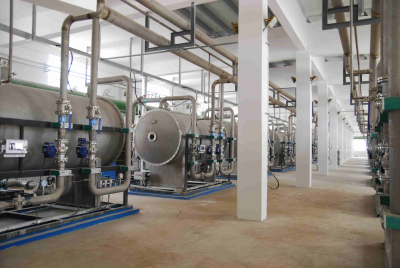
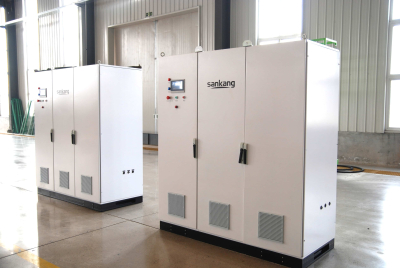
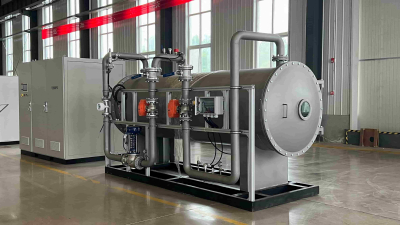
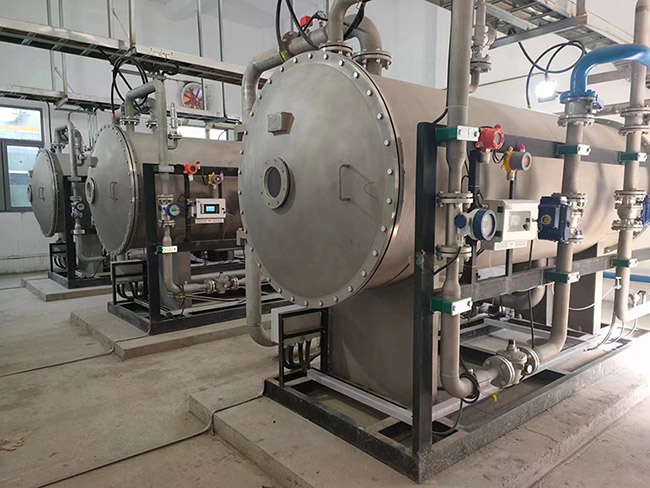
In any carbon black oxidation facility, the ozone generator is the critical enabling technology. Ozone is not stored or transported; it is generated on-site and consumed immediately in the oxidation reactor. The generator converts oxygen (from air or purified oxygen) into ozone through electrical discharge—typically corona discharge or dielectric barrier discharge at voltages reaching 10 kV or higher.
Ozone Generator Fundamentals
The core principle of ozone generation involves passing a dried oxygen-containing gas through a high-voltage electrical field. The electrical discharge dissociates oxygen molecules (O₂) into oxygen atoms, which then recombine with O₂ molecules to form ozone (O₃). Key performance parameters include:
Ozone production rate: Typically ranging from grams per hour in laboratory systems to tens of kilograms per hour in industrial installations
Ozone concentration: Can range from 1 to 300 g/m³ depending on the generator design and feed gas
Feed gas: Air typically yields lower ozone concentrations (e.g., ~12 g/h at 16 kV), while purified oxygen can achieve significantly higher outputs (e.g., ~25 g/h under the same conditions)
The "Three-Stage Ozone Generator" Concept
Modern industrial ozone generation systems for carbon black oxidation often employ a three-stage configuration to achieve optimal performance, reliability, and efficiency:
Stage 1 – Feed Gas Preparation: Ambient air is filtered, dried (to a dew point below -40°C), and compressed to the required pressure. Moisture removal is critical, as water vapor significantly reduces ozone generation efficiency and can damage the generator's dielectric materials.
Stage 2 – Ozone Generation: The prepared gas passes through one or more generator cells where high-voltage discharge converts a portion of the oxygen to ozone. The generator operates with precisely controlled voltage, frequency, and cooling to maintain stable ozone output. Typical operating parameters include generator voltages around 16 kV and cooling water requirements of approximately 40 L/h at 15°C.
Stage 3 – Ozone Delivery and Distribution: The ozone-enriched gas stream is transported to the oxidation reactor through corrosion-resistant piping. Concentration monitoring and flow control systems ensure that the correct ozone dosage reaches the reaction zone. The three-stage approach enables continuous, stable ozone supply essential for large-scale carbon black oxidation.
This three-stage architecture—preparation, generation, delivery—provides the operational reliability and process control necessary for industrial carbon black oxidation, where production typically runs in continuous mode.
Oxidation Reactor Technologies
The ozone generator supplies the oxidizing agent, but the reactor determines the efficiency and uniformity of the oxidation process. Two primary reactor configurations are used in the carbon black industry:
Fixed-Bed (Static) Reactors
In fixed-bed operation, carbon black is loaded into a reactor vessel, ozone is introduced, and the material is stirred or agitated during the reaction period. This approach is suitable for smaller production volumes or applications requiring precise quality control. The reaction is typically carried out at ambient temperatures, with reaction times of 60 to 90 minutes for complete oxidation under optimized conditions.
Fluidized-Bed (Dynamic) Reactors
For large-scale, continuous industrial production, fluidized-bed reactors are the preferred technology. In this configuration:
Carbon black particles are fed continuously into the reactor
The ozone-containing gas stream enters from the bottom through a gas distribution plate
The gas flow suspends the carbon black particles in a fluidized state
A typical fluidized-bed reactor for carbon black oxidation features an internal diameter of approximately 100 mm and a height of 1,500 mm. Studies have demonstrated that superfine carbon black can be evenly fluidized with stable bed pressure drop and continuous flow at the reactor bottom. The reaction can be effectively conducted at room temperature, with product pH values reaching below 3.5 under appropriate conditions.
The fluidized-bed approach has been successfully scaled to 400 tons per year in semi-industrial continuous production and 1,000 tons per year in commercial facilities.
Process Control Parameters
Successful ozone oxidation depends on precise control of several interdependent parameters:
Ozone Concentration and Dosage
The ozone concentration in the reaction chamber typically ranges from 0.5 to 20 wt%, with 0.5 to 5 wt% being most common. The required ozone concentration is determined by the target degree of oxidation, typically measured as volatile content at 950°C, which should fall between 1 and 25 wt% for most applications.
Ozone dosage is calculated based on the carbon black feed rate. For a desired level of oxidation, the ozone flow can range from 100 to 50,000 g/h. The concentration should be highest at the ozone inlets, decreasing toward the reactor outlet as the ozone is consumed in the oxidation reaction.
Reaction Temperature
While ozone oxidation proceeds effectively at ambient temperatures, temperature control is essential because the reaction is exothermic (releases heat). Elevated temperatures accelerate both the desired oxidation reaction and the undesirable decomposition of ozone back to oxygen. The optimal temperature range balances reaction rate against ozone stability.
Reaction Time
Oxidation extent is proportional to reaction time—longer contact times yield higher degrees of oxidation. However, beyond a certain point, no further improvement in properties such as flow characteristics is observed. In practice, reaction time is optimized to achieve target properties (pH value, volatile content) efficiently.
Real-Time Monitoring and Control
Industrial systems employ online monitoring of critical parameters to maintain product consistency:
pH value of the treated carbon black serves as a key indicator of oxidation extent
Volatile content at 950°C provides a direct measure of surface functionalization
Ozone concentration, gas flow rate, and temperature are continuously monitored and adjusted
Industrial Applications and Case Studies
Continental Carbon's EREBOS Series
Continental Carbon has developed a patented "Post-modification of carbon-based materials with ozone" technology, receiving invention patent certification for this innovation. The resulting EREBOS series carbon black offers four key advantages:
Better Dispersibility: Faster, more uniform dispersion in inks and coatings, producing superior color effects and light-blocking performance
Non-toxic and Safer: Ideal for 3C consumer electronics products requiring long-term human contact
Better Insulation: Enhanced functional groups improve insulation properties for high-end electronic applications
Sustainable Production: The ozone-based modification process generates no waste acids or emissions, supporting green manufacturing
Industrial-Scale Implementations
In China, multiple carbon black post-treatment facilities have adopted ozone oxidation technology. One notable project involves a 3,000 tons per year carbon black post-treatment plant incorporating ozone generators, tubular reactors, and classification mills. The continuous fluidized-bed process has become the industry standard for large-scale production.
Research and Development
Academic research continues to advance the understanding of ozone-carbon black interactions. Studies using X-ray photoelectron spectroscopy (XPS) and contact angle measurements have shown that increasing ozone concentration accelerates the introduction rate of oxygen-containing functional groups and increases surface free energy. The reaction between ozone and carbon black involves two primary mechanisms: surface gasification to CO₂ and functionalization with oxygenated chemical groups, predominantly carboxyl groups.
Advantages of Ozone Oxidation for Carbon Black Production
Technical Advantages
Rapid reaction kinetics: The ozone-carbon black reaction proceeds very quickly, reducing processing time
Precise, controllable oxidation: Process parameters can be fine-tuned to achieve specific product characteristics
Uniform treatment: Fluidized-bed reactors ensure consistent product quality batch after batch
Room-temperature operation: Eliminates high-temperature safety risks
Environmental Advantages
No acid waste streams: Eliminates the hazardous waste disposal issues associated with nitric acid treatment
Ozone decomposes to oxygen: Excess ozone breaks down naturally, leaving no persistent pollutants
Lower energy consumption: Ambient-temperature operation reduces energy requirements compared to thermal oxidation
Economic Advantages
Reduced corrosion: Ozone is far less corrosive than acids, extending equipment life and reducing maintenance costs
Simplified permitting: Cleaner process technology faces fewer regulatory hurdles
Premium product positioning: Ozone-treated carbon blacks command higher prices in specialty applications
Conclusion
Ozone oxidation represents a mature, commercially proven technology for carbon black surface modification, offering an optimal combination of performance enhancement, environmental sustainability, and operational efficiency. The technology has been adopted by leading carbon black manufacturers worldwide and continues to expand into new application areas.
The key to successful implementation lies in the integration of three core elements:
Reliable ozone generation—typically achieved through three-stage systems ensuring stable, continuous ozone supply
Efficient reactor design—fluidized-bed reactors enabling uniform, large-scale continuous processing
Precise process control—real-time monitoring and adjustment of ozone concentration, temperature, and reaction time
As material science advances and markets demand increasingly specialized carbon black grades—for chemical fibers, dyes, coatings, printing inks, conductive materials, and beyond—ozone oxidation technology will play an ever more critical role in enabling the next generation of high-performance carbon black products.
For carbon black producers considering capacity expansion or product line upgrades, ozone-based oxidation offers a future-proof pathway to enhanced product performance, reduced environmental footprint, and sustained competitive advantage in the global marketplace.