Application of ozone combined oxidation technology in sewage treatment
1. Introduction
Currently, with the continuous development and progress of society and the economy, the scale of social production is constantly expanding, leading to increasingly serious water pollution. However, as people's living standards improve, their demands for water quality are also becoming increasingly stringent, necessitating effective wastewater treatment. Due to its advantages, such as low ozone consumption, rapid reaction speed, and minimal environmental pollution, ozone oxidation has been widely used in wastewater treatment. Currently, ozone combined oxidation technologies, such as ozone-ultrasound technology and ozone-electrolysis treatment, have been developed. This article discusses how to effectively utilize ozone combined oxidation technologies in wastewater treatment, for reference only.
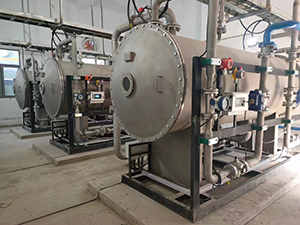
sankang ozone generation
2. Mechanism of Ozone Oxidation Technology
From the perspective of ozone's physical properties, ozone is unstable. In practice, when ozone is in air, it gradually and continuously decomposes into oxygen, emitting significant heat. However, the concentration of ozone in the air must be kept below 25%, as concentrations exceeding 25% can cause explosions. However, the concentration of ozone in air is generally below 10%, so an explosion is unlikely. When the concentration of ozone in air is below 1%, the decomposition process begins in air at room temperature and pressure, with a half-life of approximately 16 hours. When ozone is in water at a concentration of 3 mg/l, its half-life is 15 to 30 minutes. The higher the temperature and pH of the water, the faster the decomposition rate. Therefore, in practice, ozone is typically produced and utilized on-site. From a chemical perspective, ozone, as an allotrope of oxygen, is a colorless or pale blue gas. It possesses excellent oxidizing and bactericidal properties, but its instability prevents its storage. Ozone can attack negatively charged atoms in organic matter, producing electrophilic reactions, and it can attack positively charged nuclei in organic molecules, producing nucleophilic reactions. In industrial production processes, corona discharge is commonly used. During the discharge process, oxygen is ionized, becoming ions. The highly reactive oxygen ions react with oxygen molecules, ultimately forming ozone. Ozone undergoes an oxidation reaction in aqueous solutions. Because ozone, a strong oxidant, is unstable, and the free oxygen (O₃) and its intermediate decomposition products in water have strong oxidizing properties, ozone can rapidly and extensively oxidize certain elements and organic compounds in aqueous solutions. Even at low concentrations, ozone can quickly complete the oxidation process. The decomposition conditions and mechanism of ozone play a decisive role in its oxidation process. Ozone in water can form hydroxyl radicals (HO⁻). These hydroxyl radicals (HO⁻) have a strong oxidizing effect, thus providing disinfection and sterilization benefits while also decomposing pollutants in water. Ozone oxidation technology forms small-molecule acids, which continuously increase the acidity of the aqueous solution. Therefore, an appropriate base must be added to the treatment solution to maintain an appropriate pH value, laying the foundation for effective wastewater treatment. 3. Application of Ozone-Co-Oxidation Technology in Wastewater Treatment
Currently, ozone-co-oxidation technology is being used in wastewater treatment. Its use can improve wastewater treatment efficiency and lay the foundation for water quality.
3.1 Ozone-Ultrasonic Technology
Ultrasonic waves can degrade difficult-to-degrade organic pollutants in water. Therefore, the use of ozone-ultrasonic technology can lay the foundation for effective wastewater treatment while also reducing operating costs. In 1976, Dahi recognized that ultrasound could enhance the effectiveness of ozone in wastewater treatment. While using ozone oxidation technology to treat biological wastewater, Dahi simultaneously employed 20kHz ultrasound to enhance the treatment effect. He found that using 20kHz ultrasound could reduce ozone dosage by 50% during the effluent treatment. In my country, scholar Zhao Chaocheng used ozone-ultrasonic technology in the treatment of phenol-containing wastewater. His research found that the use of ultrasonic radiation during the oxidation process can increase the reaction speed. Compared to using ultrasound or ozone alone, ozone-ultrasonic technology can enhance wastewater treatment effectiveness. The higher the ultrasound power, the greater the reaction acceleration. In recent years, extensive research has revealed that ultrasound can increase the frequency of ozone use. Compared to simple ozone oxidation technology, ozone-ultrasound technology can enhance the speed and effectiveness of dye degradation. During the dye degradation process, ozone and ultrasound react together to form a large number of strong oxidizing free radicals, enhancing the degradation effect.
3.2 Combined Ozone-Electrolysis Treatment Technology
In practice, ozone oxidation technology is widely used in modern industry for wastewater treatment due to its significant advantages, such as strong oxidizing properties and lack of secondary pollution after the reaction. Micro-electrolysis technology, also known as internal electrolysis, is widely used in the treatment of bio-refractory wastewater. Due to its mature theoretical foundation, high treatment efficiency, low investment cost, and practicality, internal electrolysis technology is gaining increasing recognition. Internal electrolysis technology generates Fe₂+ and Fe₃+ during use, while ozone oxidation technology generates a large number of hydroxyl radicals. Combining ozone oxidation and electrolysis in wastewater treatment can combine Fe₂+ and Fe₃+ with hydroxyl radicals to create another excellent wastewater treatment agent. Ozone-electrolysis combined treatment technology combines electrochemical corrosion, chemical oxidation, catalytic oxidation, flocculation, and adsorption. Its use in the pretreatment of turmeric saponin wastewater has proven to reduce the subsequent biochemical treatment load and enhance wastewater treatment effectiveness. Yan Haibo et al. used ozone-electrolysis combined technology in dye wastewater treatment, achieving significant improvements and enhancements.
3.3 Catalytic Ozonation Technology
In recent years, catalytic ozone oxidation technology has gained widespread application. Under normal temperature and pressure conditions, ozone oxidation alone is ineffective in wastewater treatment, so catalytic ozonation can be used. With increasing the production and generation rate of OH as the primary research goal, catalytic oxidation technologies are continuously developing and maturing, such as photocatalytic ozonation, base-catalyzed ozonation, and heterogeneous catalytic ozone oxidation. Photocatalytic ozonation primarily uses ultraviolet (UV) light as an energy source and O₃ as an oxidant. Under UV irradiation, ozone decomposes to form active secondary oxidants that oxidize organic matter. Photocatalytic oxidation can be used to treat difficult-to-degrade organic wastewater, altering the molecular structure of these substances and forming new, biodegradable substances, thereby improving wastewater treatment efficiency. Base-catalyzed ozonation primarily catalyzes the formation of OH radicals, ultimately oxidizing the decomposed organic matter. Heterogeneous catalytic ozone oxidation, a new technology, primarily aims to decompose O₃ to form active free radicals, enhancing oxidation efficiency.
4. Advantages of Ozone-Co-Oxidation Technology in Wastewater Treatment
Currently, with the continuous development of industrialization and the expansion of social production, water pollution is becoming increasingly serious. However, as people's quality of life continues to improve, the demand for drinking water quality is becoming increasingly higher, necessitating effective sewage treatment. Currently, ozone-co-oxidation technology is widely used in sewage treatment to ensure effective treatment. Using ozone-co-oxidation technology in sewage treatment can improve treatment efficiency. Using ozone-co-oxidation technology alone can yield limited results if difficult-to-degrade substances are present. However, ozone-co-oxidation technology can effectively degrade these difficult-to-degrade substances, improving treatment efficiency and thus enhancing the quality of people's daily water. Using ozone-co-oxidation technology in sewage treatment can save treatment costs while improving treatment efficiency. Therefore, its application in sewage treatment has significant economic and social benefits, leading to its increasing application. Finally, the use of ozone-oxidation technology in sewage treatment can protect the environment, alleviate water pollution, improve water quality, and provide better water resources for production and daily use, thereby promoting social development and progress.
5. Conclusion
In summary, ozone-oxidation technology plays a vital role in sewage treatment. Therefore, it should be used rationally to improve sewage treatment effectiveness. Using ozone-oxidation technology in sewage treatment can effectively decompose impurities and reduce water color, thereby ensuring effective sewage treatment. Furthermore, its use can protect the environment, leading to its increasing application.