Application cases of ozone generator in printing and dyeing wastewater
Using an ozone generator oxidation technology has attracted significant attention in the advanced treatment of printing and dyeing wastewater due to its rapid reaction, strong oxidizing properties, and minimal secondary pollution. It utilizes ozone, under the action of a specific catalyst, to rapidly decompose wastewater, producing a large number of hydroxyl radicals. This oxidizes and removes recalcitrant organic matter, thereby reducing COD and improving its biodegradability.
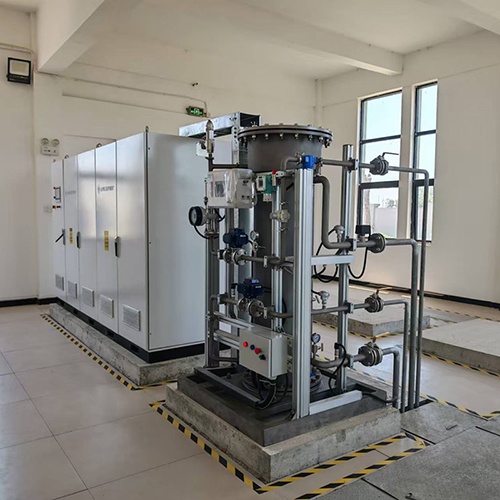
Using the biochemical effluent from a wastewater treatment plant in a printing and dyeing industrial park as the research object, we investigated the effectiveness of ozone treatment on actual printing and dyeing industrial park wastewater. We analyzed the effects of ozone dosage and reaction time on the removal efficiency of COD, aniline, and color in the wastewater. This data provides reliable reference data for process improvements within this printing and dyeing industrial park and also informs the design of aerobic treatment processes for other printing and dyeing wastewaters, particularly those from industrial parks.
The tailwater from one project was derived from the biochemical effluent from a wastewater treatment plant in a printing and dyeing industrial park. This printing and dyeing industrial park's wastewater treatment facility primarily collects and treats wastewater generated by approximately 20 printing and dyeing enterprises within the industrial park. The total design capacity is 7,000 m³/d. The main process flow is "pretreatment + hydrolysis and acidification + activated sludge + MBR." The biochemical effluent has a COD concentration of 50-90 mg/L, a color of 20-40 times, and an aniline concentration of less than 1 mg/L.
Ozone generated by the ozone generator flows through stainless steel pipes into the titanium aeration plate in the tank body. The titanium aeration plate mixes thoroughly with the wastewater within the tank body. The remaining ozone is decomposed into oxygen by the ozone exhaust destructor before being discharged into the atmosphere.
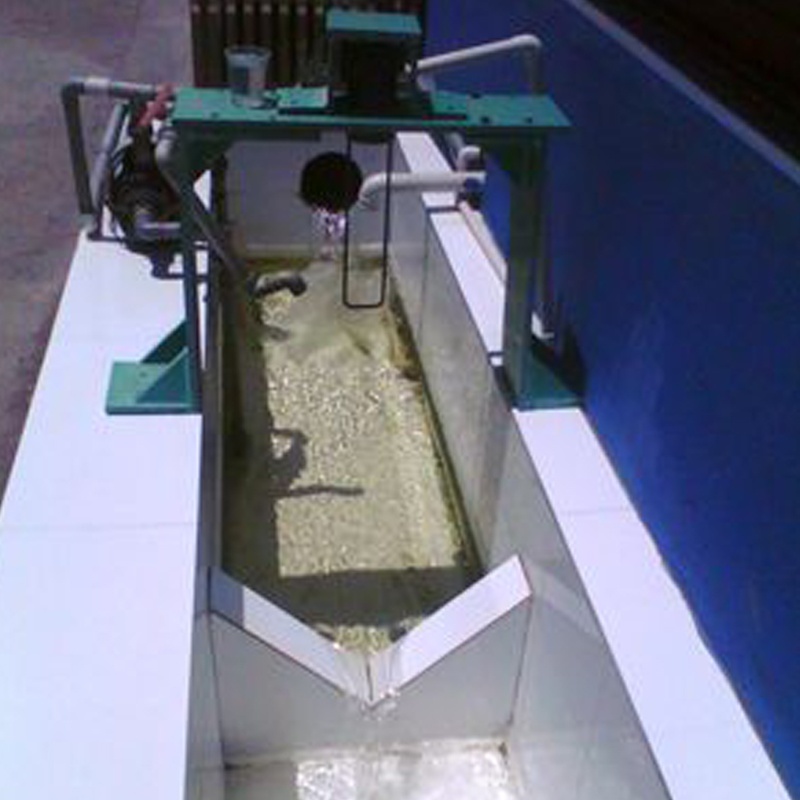
Wastewater after decolorization
At an ozone dosage of 25 mg/L, COD removal is 35%. Continued increases in ozone dosage do not result in a significant increase in COD removal. The optimal ozone dosage for color removal in wastewater is 25-30 mg/L, achieving a removal rate of 72%. Further increases in ozone dosage do not significantly reduce color in the wastewater. Ozone can achieve an 88% aniline removal rate, but at a dosage of 20-25 mg/L, it reaches approximately 84%. Further increases in ozone dosage only increase the aniline removal rate by 4%. Based on the above analysis, the most economically reasonable ozone dosage for the raw water used in this experiment is 20-25 mg/L. Continuously increasing the ozone dosage does not significantly reduce COD, color, or aniline levels in the wastewater.
Ozone's mechanism of action on organic matter involves two reactions: direct and indirect. The indirect reaction primarily involves the oxidation of dissolved inorganic and organic matter by hydroxyl radicals and is largely non-selective towards organic matter. The direct reaction primarily involves cycloaddition, electrophilic, and nucleophilic reactions of ozone molecules. Ozone molecules react selectively, primarily targeting unsaturated aromatic compounds, unsaturated aliphatic compounds, and some specific functional groups. Printing and dyeing wastewater has a complex composition and may contain inhibitors of hydroxyl radicals. Therefore, the direct reaction of ozone molecules significantly affects the treatment effectiveness of ozone in this wastewater. In this experiment, ozone was unable to directly reduce aniline to undetectable levels.
The most economical and reasonable ozone dosage is 20-25 mg/L, so the ozone dosage used in this experiment was 25 mg/L. As shown in the figure, for COD, color, and aniline, the removal rates increased to a certain extent with increasing ozone reaction time. However, when the reaction time exceeded 40 minutes, simply increasing the reaction time had little effect on the removal rate. For this experiment, the optimal reaction time was 40 minutes.