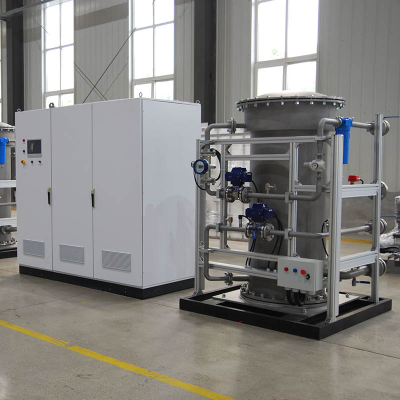
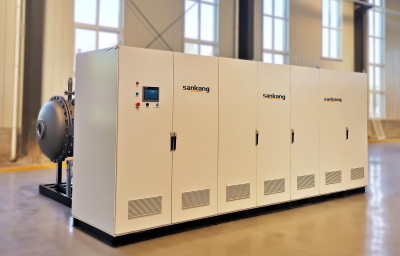
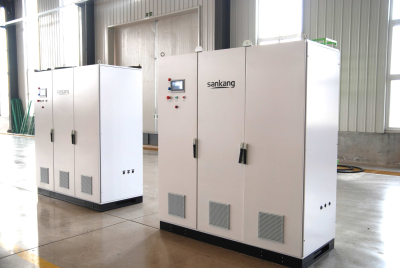
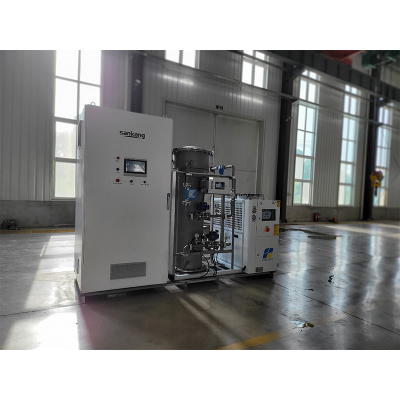
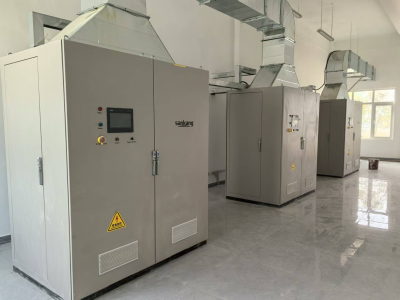
14KG/h ozone generator
When choosing a 14KG/h ozone generator, it is necessary to clarify the core parameters according to the specific application scenario. First, it is necessary to confirm the ozone concentration requirements, such as water treatment requires high concentration (>12mg/L) model, and air disinfection can choose low concentration (5-8mg/L); Secondly, it is necessary to evaluate the type of air source, the oxygen source model has high output but high cost, and the air source model has low cost but low concentration, which needs to be selected according to the balance between budget and effect. In addition, it is necessary to pay attention to equipment stability and maintenance costs, and give priority to models with modular design and intelligent monitoring systems to facilitate rapid fault location and maintenance. For example, a brand of equipment can reduce maintenance response time to less than 2 hours and annual downtime by more than 50% by integrating remote diagnostics. Finally, it is necessary to consider the energy efficiency ratio of the equipment, and give preference to models with high-frequency power supply technology (>1000Hz) and high-efficiency cooling systems to reduce long-term operating costs. For example, a water plant found that the annual power consumption of the model using high-frequency power supply is reduced by 18% compared with the traditional model, and the comprehensive return on investment cycle is shortened to 3 years. When selecting the model, it is also necessary to pay attention to the supplier's qualifications to ensure that the equipment meets national environmental protection and safety standards (such as GB/T 18883-2002) and avoid subsequent rectification risks caused by false parameter standards or design defects.
# 14KG/h Ozone Generator: Core Equipment for Industrial-Grade Disinfection and Oxidation
In the fields of industrial water treatment, air purification, and chemical oxidation, ozone generators have become essential equipment due to their high efficiency and environmentally friendly features. Among them, the 14KG/h ozone generator, as a large-scale industrial product, is widely used in municipal water supply, pharmaceutical workshops, food processing plants, and large wastewater treatment plants due to its high output, high concentration, and stable performance, making it an indispensable "green disinfection guardian" in modern industrial production.
### 1. Technical Principle: High-Efficiency Oxygen Production Dominated by Corona Discharge
The 14KG/h ozone generator primarily uses the corona discharge method to produce ozone. Its core principle is that a high-frequency high-voltage power supply generates a strong electric field in the discharge gap, causing oxygen molecules (O₂) to split into oxygen atoms (O), which then combine with oxygen molecules to produce ozone (O₃). This process can be simplified into the chemical reaction formula:
**3O₂ → 2O₃**
To improve efficiency, the equipment is usually equipped with a pure oxygen or oxygen-enriched system, achieving oxygen purity above 90%. Compared to air (which contains 21% oxygen), this can significantly increase ozone production. For example, a certain brand of 14KG/h model can reach an ozone concentration of 12%-15% when using an oxygen source, while the air-sourced model only reaches 6%-8%, nearly a twofold difference in output. Additionally, the application of a high-frequency power supply (frequency >1000Hz) reduces the equipment size by 30%, lowers energy consumption by 20%, while also reducing the heat generated by corona discharge, thereby extending the lifespan of the equipment.
### 2. Core Configuration: Modular Design Ensures Stable Operation
1. **Discharge Unit**
Utilizes micro-gap dielectric barrier discharge (DBD) technology, with the discharge gap controlled between 0.1-0.5 mm. High dielectric constant ceramic tubes or quartz tubes are used as dielectric materials to ensure uniform electric field distribution and prevent localized overheating. The device optimizes the electrode structure to increase ozone yield, reaching internationally advanced levels.
2. **Cooling System**
Equipped with a dual-loop water cooling system, where the external loop cooling water exchanges heat with the internal loop coolant (usually deionized water) through a plate heat exchanger, maintaining the discharge unit temperature at 25-30°C. If the temperature exceeds 40°C, the ozone decomposition rate accelerates by 80%, causing a sharp drop in output. In one case, a water treatment plant experienced a system shutdown due to cooling system failure. After replacing the water cooling module, production resumed, reducing annual maintenance costs by 150,000 yuan.
3. **Gas Source Treatment**
Oxygen-source models require a three-stage filtration system (0.01 μm precision) and a drying device (dew point ≤ -60°C) to remove moisture and impurities, preventing dielectric material breakdown. Air-source models require an air compressor and a refrigerated dryer, but the ozone concentration is only 50%-60% that of oxygen-source models.
4. **Intelligent Control System**
Monitors voltage, current, temperature, and ozone concentration in real-time via PLC, automatically adjusting the power frequency and gas flow. For example, when the concentration falls below the set value, the system automatically increases the voltage to 12 kV (rated at 10 kV) while reducing the intake to maintain stable output. After application at a food factory, the product microbial compliance rate improved from 92% to 99.5%.
### 3. Application Scenarios: A "Versatile Player" Covering Multiple Fields
1. **Drinking Water Treatment**
A 14KG/h ozone generator can meet the disinfection needs of a water plant treating 100,000 tons of water per day. After ozone mixes with water, it can kill 99.99% of Cryptosporidium and Giardia cysts within 3 minutes, while also breaking down residual chlorine in the water, preventing the formation of carcinogens such as chloroform. After the renovation of a municipal water plant, the turbidity of the finished water dropped from 0.5 NTU to 0.2 NTU, and the taste improved significantly.
2. **Industrial Wastewater Treatment**
In chemical and dyeing wastewater treatment, ozone decomposes organic pollutants (such as COD and BOD) through strong oxidation, achieving a decolorization rate of over 90%. After a textile factory adopted ozone oxidation technology, the wastewater reuse rate increased from 60% to 85%, saving 2 million yuan annually in water costs.
3. **Space Disinfection**
In pharmaceutical workshops, operating rooms, and other environments, equipment delivers ozone to target areas via air ducts, killing 99.9% of airborne mold spores within 30 minutes. After a vaccine manufacturer implemented it, the sterility assurance level (SAL) of products improved from 10⁻³ to 10⁻⁶.
4. **Food Preservation**
Soaking fruits and vegetables in ozone water (concentration 4-6 mg/L) can extend their shelf life by 7-10 days while also degrading pesticide residues. After use in a cold chain logistics center, the loss rate of strawberries dropped from 15% to 5%, reducing annual losses by 3 million yuan.
### 4. Selection and Maintenance: Key Parameters and Common Faults