An introduction to the deodorization function of ozone generators.
Ozone, composed of three oxygen atoms, is a strong oxidizing agent. Leveraging its properties, it is widely used in deodorization applications, primarily in water treatment equipment for drinking water and fecal odor removal, and also in air purification, food, and medical fields.
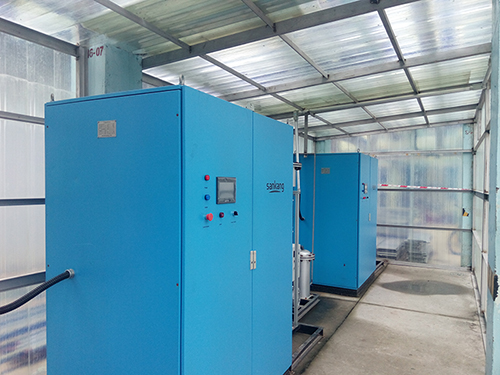
How ozone generator are used in deodorization, including:
1. Advantages of Ozone Deodorization
As long as electricity and oxygen are available, ozone can be produced, eliminating the need for gas cylinders or similar chemical storage.
Its oxidizing power is second only to fluorine, offering stronger effects (deodorization, sterilization, etc.) compared to other methods.
It ultimately decomposes back into oxygen, thus eliminating concerns about secondary pollution and benefiting the environment.
2. Precautions for Ozone Deodorization
Ozone is harmful at high concentrations; therefore, care must be taken to avoid human contact during system design.
The reaction between ozone and ozone-containing substances generally requires a certain amount of time; therefore, sufficient reaction time must be ensured, or a catalyst should be used to accelerate the reaction.
The Principle of Ozone Deodorization
Odor substances are composed of sulfides or organic acids, which are decomposed by the strong oxidizing reaction of ozone, thus achieving deodorization. Generally speaking, ozone has a strong reaction with compounds holding -SH, -NH2, =S, =NH, and -OH groups. Since many odor substances hold these functional groups, ozone deodorization is effective for many odor substances. For example, ozone reacts with representative substances such as hydrogen sulfide and methanethiol (used in feces and urine) to eliminate odors.
Ozone generator deodorization method
Ozone deodorization methods are broadly divided into two types:
One is an inhalation method where ozone gas is introduced into the device to react with other ozone, and the remaining ozone decomposes into oxygen and is released outside the device. This method uses a catalyst at the outlet to decompose ozone, which also promotes the reaction between ozone and odor substances. The other method is a fumigation method where ozone is released into an odor-producing chamber to act on odor substances present in the air and those adhering to floors, walls, ceilings, etc. In urban wastewater treatment plants that process large volumes of domestic sewage, anaerobic microorganisms produce odors. Introducing ozone gas into the treatment tank allows the ozone to react with the odorous substances within the tank over a prolonged period, thus deodorizing the wastewater.