Application of Ozone in DeNox
The main component of NOx in flue gas is NO (with a volume concentration of 95%), which is difficult to dissolve in water and has poor reaction activity. As a strong oxidant, ozone can easily oxidize NO into high valence NO2, N2O3, N2O5, etc., and dissolve in water to generate HNO2 and HNO3. As a clean strong oxidant, ozone can quickly and effectively oxidize NO to high valence nitrogen oxides.
Ozone has strong oxidizing properties, and phenolic compounds are easily oxidized. Therefore, the method of ozone oxidation can be used to treat phenol pollution in water, which is rapid in reaction, simple in process, and has no secondary pollution problem.
Ozone can effectively degrade phenolic organic pollutants COD, TOC, and the degradation rate of phenolic organic pollutants exceeds 80%. As the reaction time prolongs and the initial concentration increases, the degradation rate gradually increases.
Further analysis reveals that the degradation process of ozone mainly relies on oxidation reactions. Ozone molecules have high oxidation ability and can react both internally and externally to degrade phenolic organic pollutants through oxidation reactions. During this process, high-energy oxygen atoms in ozone molecules react with the carbon hydrogen bonds in phenolic organic pollutants, resulting in some oxygen atoms combining to form internal ketones, while some carbon hydrogen bonds break, producing carbon oxides and carbonyl compounds, ultimately decomposing into harmless substances such as water and carbon dioxide.
Ozone simultaneous desulfurization and polymer oxidation mainly utilize the strong oxidizing property of ozone to oxidize NO into high valence nitrogen oxides, and then absorb and convert nitrogen oxides and sulfur dioxide into water-soluble substances in the washing tower. Combined with the tail wet washing device, NOX is efficiently removed, and the polymer oxidation efficiency is enhanced with the increase of O3/NO. At O3/NO=0.9, the polymer oxidation efficiency reaches 86.27%.
The influencing factors of simultaneous desulfurization and desulfurization using ozone mainly include molar ratio, reaction temperature, reaction time, absorption liquid properties, and addition method, which have varying degrees of impact on the efficiency of polymer oxidation and desulfurization.
Compared with other chemical substances in the gas phase such as CO, SOx, etc., NOx can be quickly oxidized by ozone, which makes the ozone oxidation of NOx highly selective. Because NOx in the gas phase is converted into ionic compounds dissolved in aqueous solution, this makes the oxidation reaction more complete, irreversibly removing NOx without generating secondary pollution. After oxidation reaction, the added ozone is consumed, and excess ozone can be decomposed in the spray tower. In addition to NOx, some heavy metals such as mercury and other heavy metal pollutants are also oxidized by ozone. The high concentration of dust or solid particles in the flue gas will not affect the removal efficiency of NOx.
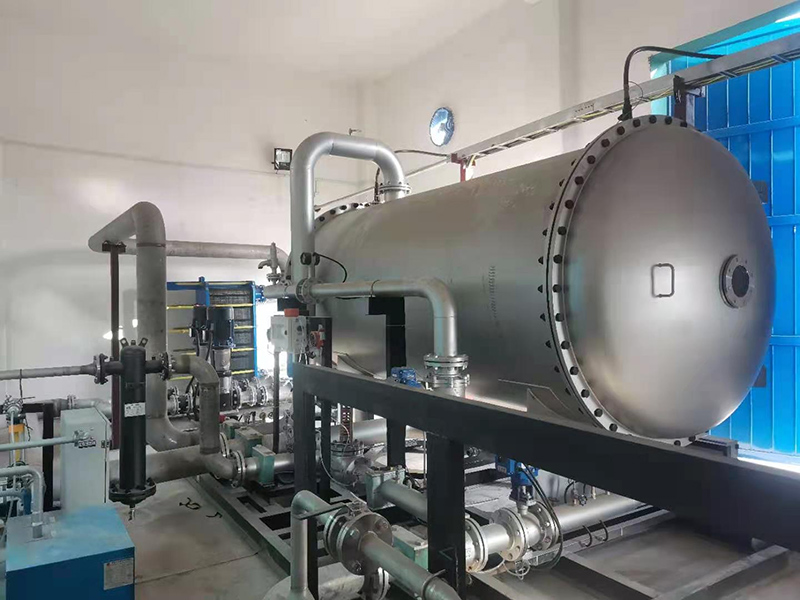
80kg/h for Ozone Generator denitrification
The polymer oxidation process utilizes highly oxidizing ozone gas to convert NO in flue gas into easily soluble NOx, which is absorbed in the subsequent desulfurization tower. Therefore, the process of polymer oxidation does not produce direct by-products.
The synergistic removal of multiple pollutants by ozone oxidation has the following important technical advantages compared to other pollutant control methods:
It is unrelated to the combustion process and can be various types of flue gases such as boiler flue gas, waste incineration flue gas, cement kilns, glass kilns, sintering machines, etc., as long as there are flue gas conditions below 200 ℃ and a certain residence time.
Sankang Ozone is a high-tech enterprise specializing in the production, research and development, and manufacturing of ozone generators. The Sankang ozone generator is widely used in fields such as flue gas denitrification, nitrogen oxide compound treatment and oxidation.